Current role
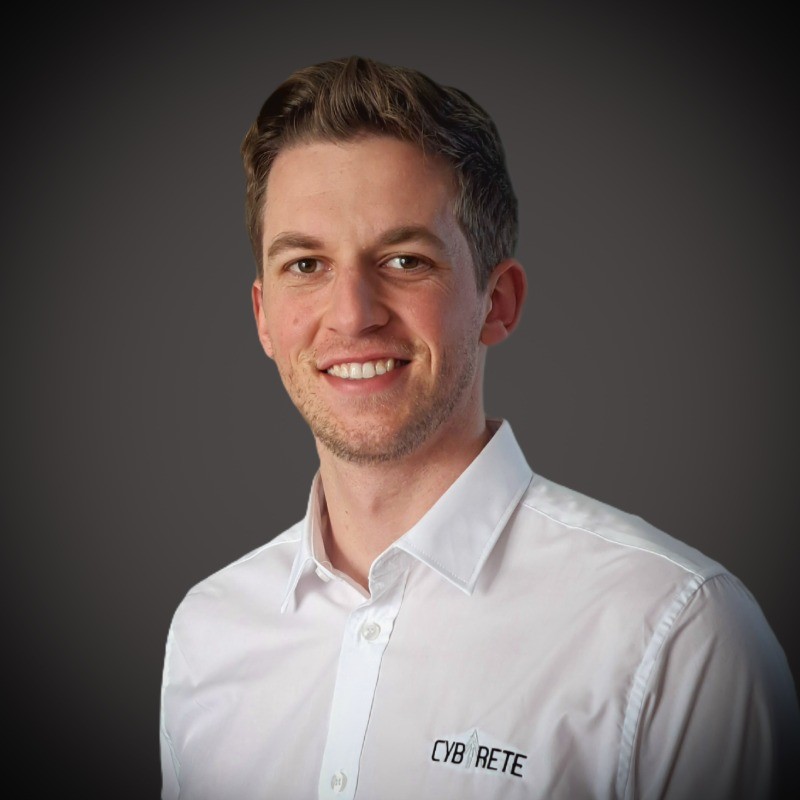
Cybarete · Founding Engineer (Sep 2022 – present). First engineering hire; work spans embedded firmware, IIoT platforms, full-stack web applications, AI integrations, automation software, and on-site delivery. Helped bring CrewPulse, a Cybarete-developed SaaS workforce management platform, to market in South Africa and the USA.
Skills
- Business Development
- Full-stack Development
- Firmware and Embedded Systems
- Technical Product Management
- Project Management
Tools and tech I reach for
Tools: Notion, n8n (workflow automation without the SaaS tax), Google Suite, Cursor (AI-native — genuinely changes how I write code), Claude Code CLI & Mobile (agentic coding from terminal or phone), Docker, Fusion, KiCAD.
Languages & frameworks: JS & Svelte, SQLite (not every app needs Postgres), Erlang/Elixir OTP (the right model for concurrent, fault-tolerant systems), C/C++ (firmware — where abstraction leaks actually cost you), Python, Kotlin.
Industrial & comms: MQTT, OpenThread, Modbus RS-485 & TCP (still running most of the world's plant floor). Licensed amateur radio operator — ZS callsign. RF knowledge that feeds back into the work.
Exploring: TigerBeetle — a financial-grade accounting database (Zig-based, built for correctness at scale rather than bolting on transactions after the fact).
Industries
Mining: Hardware and software for safety and connectivity in underground mining (Africa).
Manufacturing: Software for labour productivity in job-shop manufacturing.
Logistics: Systems for consignment stock and warehouse management.
Agriculture: Product development for precision livestock farming.
Healthcare: Systems development and research for hospital management.
What I believe
Faith
Family
Integrity
Community
Rest
Research
- A holonic Human Cyber-Physical System in healthcare
This thesis was my attempt to treat healthcare as a real human–cyber–physical system, not just “software in a hospital.” I used holonic thinking to break the problem into parts that can act independently, coordinate, and still keep humans in the loop. The focus was on making integration practical: where information should flow, where decisions should sit, and where automation helps or hurts. The end goal was a system structure that stays robust in the messy reality of healthcare and supports people rather than competing with them.
- Possibilities and Challenges for Human-System Integration in the South African Manufacturing Context
This paper zooms in on what human–system integration looks like when you’re working with the constraints and realities of South African manufacturing. I explored where the biggest opportunities are (productivity, decision support, safer work) and where the friction shows up (skills gaps, legacy equipment, fragmented data, and change management). The thread running through it is that good integration is as much about operations and people as it is about technology. The practical takeaway is a clearer map of what’s feasible, what’s risky, and what needs to be designed intentionally from day one.
- A Design Process for Holonic Cyber-Physical Systems Using the ARTI and BASE Architectures
Here I worked on a concrete design process for building holonic cyber-physical systems without turning “holonic” into a vague label. The paper ties the ARTI and BASE architectures into a step-by-step way to go from requirements to an implementable holonic structure. The goal was to give engineers something more usable than a set of principles — a process that helps you decide boundaries, responsibilities, interfaces, and coordination patterns. If you’re building distributed systems in manufacturing, it’s about reducing ambiguity and making the design repeatable.
- Classification of Technical Challenges to Human-System Integration in Cyber-Physical Systems
This paper is about naming the real technical problems that show up when you try to integrate humans into cyber-physical systems — beyond the usual “add a UI and training.” We built a classification of challenges so teams can spot gaps early: sensing and context, data quality, trust and explainability, safe autonomy, timing, and integration across heterogeneous systems. The value of a classification is that it turns fuzzy problems into something you can systematically design for and test against. In practice, it’s a checklist for building CPS that people can actually work with under pressure.
Books and articles I enjoy
- The Ghost in the Machine — Arthur Koestler
- The Personal MBA — Josh Kaufman
- AI Engineering — Chip Huyen (O'Reilly)
- Start with Why — Simon Sinek
- Practicing the Way — John Mark Comer
- The Screwtape Letters — C.S. Lewis
I love a board game or two; Connect 4's one of my favourites. Keen to give it a go? Play against me.